
A starting point for discussion
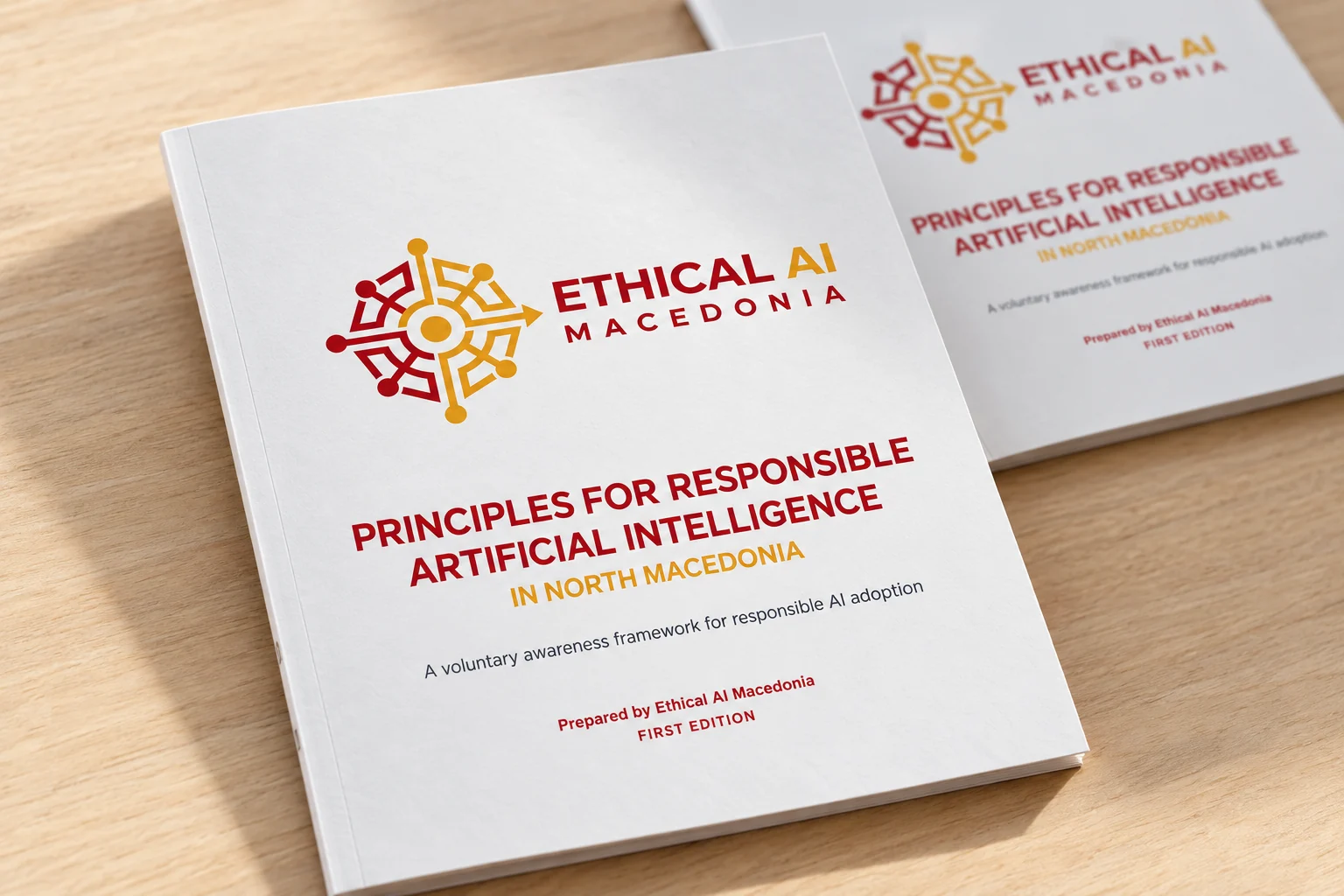
Ethical AI Macedonia has prepared the first edition of its Principles for Responsible AI, an ethical reference for businesses and other organizations in North Macedonia. Developed in-house, the principles bring together established international guidance with attention to the circumstances in which AI is being adopted locally, including smaller languages, incomplete digitalization and the need to preserve professional competence.
Our main purpose is to encourage a substantive discussion about responsible AI use in North Macedonia. As businesses introduce AI into their work, they face decisions about information, reliability, human oversight and the interests of clients and employees. We want the principles to provide a common reference for examining those decisions and sharing experience.
Academic review and wider contributions
The text is currently under review by individuals working in academia in North Macedonia, Sweden, Italy and other jurisdictions. Their perspectives will help us examine its foundations, identify omissions and improve the clarity and usefulness of its recommendations.
We also welcome comments, critiques and proposals from businesses, civil society, technical practitioners and other interested individuals. Academic expertise is an important contribution, while practical experience can reveal difficulties that are less visible in a general framework. A recommendation may sound reasonable on paper but prove unclear, disproportionate or difficult to apply in a small company. We want to understand those situations and use them to improve the text.
Improving the principles through business experience
We intend to develop the principles continuously, drawing on the experiences of businesses that build, supply or use AI. That means learning about actual workflows, the benefits organizations achieve, the problems they encounter and the safeguards they find effective. It also means examining consequences that may emerge gradually, such as overreliance on automated answers or changes in how younger professionals acquire essential skills.
Useful feedback can be specific and critical: Which recommendations need examples? What risks have we overlooked? Where do the principles assume resources or expertise that smaller businesses do not have? What has worked in practice, and what has failed? Those questions should guide future revisions and help keep the document relevant as technology and business practices change.
Building a continuing conversation
Publishing this first edition is one step in a wider effort to bring businesses and other participants into a continuing conversation about responsible AI. Through research, events and direct exchanges, we want to understand local challenges and make the discussion more concrete.
Our goal is greater AI adoption through responsible use. We want the principles to help organizations recognize opportunities, make informed choices and protect the people affected by their work. We invite readers to question the text, contribute their experience and help shape its next edition.